
Waar bent u naar op zoek?

Platte daken worden veel gebruikt voor commerciële, industriële en residentiële zonne-installaties omdat ze voldoende ruimte en flexibele paneelindelingen bieden. Sterke winden kunnen echter aanzienlijke opwaartse en zijdelingse krachten veroorzaken op fotovoltaïsche systemen, waardoor structurele stabiliteit een belangrijke overweging is tijdens het ontwerpproces. Ervoor zorgen dat zonnepanelen veilig blijven, vereist de juiste combinatie van techniek, montagetechnologie en installatiepraktijken.
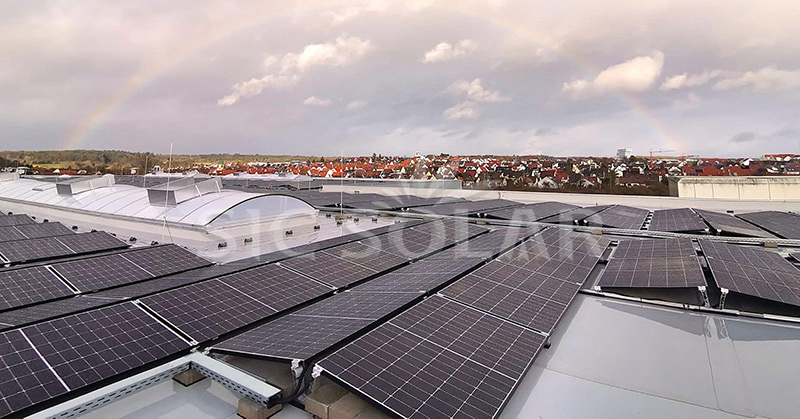
De eerste stap is het uitvoeren van een gedetailleerde analyse van de windbelasting. Ingenieurs berekenen de verwachte winddruk op basis van lokale bouwvoorschriften, regionaal klimaat, gebouwhoogte, dakgeometrie en omliggend terrein. Deze berekeningen bepalen de vereiste sterkte van het montagesysteem en het aantal bevestigingspunten of de benodigde ballast om opwaartse windkrachten te weerstaan.
Het kiezen van het juiste montagesysteem is even belangrijk. Zonne-installaties op platte daken maken doorgaans gebruik van geballaste systemen, mechanisch bevestigde systemen of hybride ontwerpen. Geballaste systemen gebruiken zorgvuldig berekende gewichten om de installatie op zijn plaats te houden zonder het dakmembraan te doorboren, terwijl mechanisch bevestigde systemen rechtstreeks aan de gebouwstructuur worden bevestigd voor extra stabiliteit. Hybride oplossingen combineren beide methoden om een optimale balans tussen dakbescherming en windbestendigheid te bereiken.
De indeling van het zonnepaneelveld beïnvloedt ook het vermogen om sterke winden te weerstaan. Een juiste afstand tussen de rijen panelen helpt turbulentie door wind te verminderen, terwijl het behouden van een lagere hellingshoek de winddruk op de modules kan verlagen. Bij sommige commerciële projecten worden oost-westmontageconfiguraties gekozen omdat ze het totale windprofiel verminderen en een hogere paneeldichtheid mogelijk maken.
De kwaliteit van de montagecomponenten speelt een grote rol in de prestaties op lange termijn. Aluminium rails, roestvrijstalen bevestigingsmiddelen en corrosiebestendige beugels moeten sterk genoeg zijn om gedurende de levensduur van het systeem herhaalde windbelastingen te doorstaan. Hoogwaardige materialen helpen vervorming, losraken en corrosie te voorkomen, waardoor de montagestructuur betrouwbaar blijft onder zware weersomstandigheden.
Rand- en hoekgebieden van daken vereisen speciale aandacht omdat windsnelheden op deze locaties doorgaans hoger zijn. Ingenieurs verhogen in deze zones vaak de ballast, voegen extra dakbevestigingen toe of versterken de montagestructuur om de algehele systeemstabiliteit te verbeteren.
Een correcte installatie is net zo belangrijk als een goed ontwerp. Alle bevestigingsmiddelen moeten worden aangedraaid volgens de specificaties van de fabrikant, rails moeten correct worden uitgelijnd en ballastblokken moeten precies worden geplaatst zoals aangegeven in de technische tekeningen. Zelfs een goed ontworpen systeem kan problemen ondervinden als installatieprocedures niet correct worden gevolgd.
Fabrikanten zoals SIC Solar, een bedrijf dat gespecialiseerd is in de productie en levering van fotovoltaïsche montagesystemen, bieden montageoplossingen voor platte daken die zijn ontworpen om te presteren onder veeleisende weersomstandigheden. Hun systemen zijn ontworpen met geoptimaliseerde structurele indelingen, duurzame materialen en betrouwbare bevestigingscomponenten om de windbestendigheid te verbeteren en tegelijkertijd een efficiënte installatie te behouden.
Regelmatige inspectie en onderhoud dragen ook bij aan stabiliteit op lange termijn. Het periodiek controleren van klemmen, rails, ballastplaatsing en aandraaimomenten van bevestigingen helpt om losgeraakte onderdelen te identificeren voordat zwaar weer optreedt. Het verwijderen van vuil rondom het montagesysteem en het zorgen voor een goede waterafvoer van het dak kunnen de installatie verder beschermen.
Door nauwkeurige berekeningen van windbelasting, geschikte montagemethoden, duurzame materialen en professionele installatie te combineren, kunnen zonne-energiesystemen op platte daken veilig blijven, zelfs in gebieden die aan sterke winden zijn blootgesteld. Een zorgvuldig ontworpen montagesysteem beschermt niet alleen de zonnepanelen, maar helpt ook bij het waarborgen van een consistente energieproductie en betrouwbare werking gedurende de volledige levensduur van het project.



 IPv6 Netwerk ondersteund
 Nederlands
  English
 Deutsch
 español
 português
 العربية
 日本語
日本語 한국의
한국의 Melayu
 Tiếng việt