
Waar bent u naar op zoek?

Zonneparken Het gaat om grote installaties met zonnepanelen die elektriciteit opwekken voor het elektriciteitsnet, niet slechts voor één gebouw. De hoeveelheid opgewekte elektriciteit kan sterk variëren, afhankelijk van de technologie en het weer. Daarom kan een zonnepark van dezelfde omvang een andere opbrengst hebben, afhankelijk van de locatie.
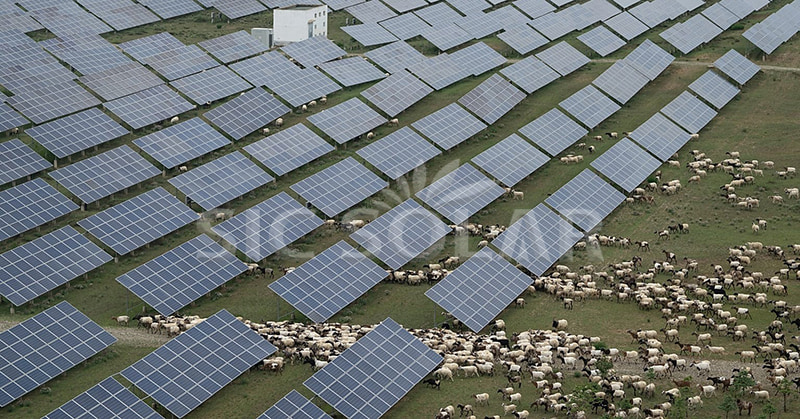
Het makkelijkst te beoordelen is de capaciteit, die meestal wordt gemeten in megawatt (MW). Een klein zonnepark heeft een capaciteit van ongeveer 5-10 MW, terwijl middelgrote parken 20-50 MW kunnen produceren. De grootste projecten kunnen meer dan 100 MW leveren, en sommige speciale projecten wereldwijd bereiken zelfs bijna of meer dan 1 gigawatt (GW). Onthoud dat capaciteit de maximale hoeveelheid energie is die een park kan opwekken onder ideale omstandigheden, niet de energieproductie op elk moment.
Wat ze daadwerkelijk produceren, wordt normaal gesproken uitgedrukt in megawattuur (MWh) of gigawattuur (GWh) per jaar. Dat hangt sterk af van de hoeveelheid zonlicht die ze ontvangen. Op plekken met veel zon, zoals woestijnen, kan een zonne-energiepark van 1 MW jaarlijks 1.700 tot 2.200 MWh produceren. Maar als het in het noorden bewolkt is, kan dat dalen tot 1.000 tot 1.300 MWh.
Een ander aspect is de manier waarop de panelen worden opgesteld. Meestal worden vaste frames gebruikt die aan de grond zijn bevestigd, omdat die goedkoop en gemakkelijk verkrijgbaar zijn. Maar zonvolgsystemen kunnen de energieopbrengst aanzienlijk verhogen. Een goede opstelling helpt bij het bepalen van de optimale hoeken, de afstanden en de windomstandigheden, factoren die allemaal van invloed zijn op de energieopbrengst over tijd. Bedrijven, bijvoorbeeld... SIC Solar Het bedrijf, dat montagesystemen voor zonnepanelen produceert en verkoopt, hecht er veel waarde aan dat alles stabiel en goed uitgelijnd is, zodat de panelen gedurende hun levensduur optimaal presteren.
De kwaliteit van de panelen is ook erg belangrijk. Nieuwe panelen kunnen meer dan 20% beter presteren, waardoor je meer energie uit hetzelfde grondoppervlak haalt. In combinatie met goede montagesystemen kun je nog veel meer energie opwekken zonder dat het zonneveld groter hoeft te worden.
De hoeveelheid grond die je hebt en hoe je die indeelt, is ook erg belangrijk. De berekening laat zien dat 1 MW aan zonnepanelen ongeveer 1,5 tot 2 hectare grond nodig heeft. De onderlinge afstand is belangrijk om schaduwen te voorkomen en reparaties makkelijker te kunnen uitvoeren. Zo ben je er zeker van dat je jarenlang dezelfde hoeveelheid stroom kunt blijven opwekken.
Ten slotte is de manier waarop je het op het net aansluit en het eventuele stroomverlies van belang. De omvormer, de kabel en de aardingskabels spelen allemaal een rol in de productiekosten. Stevige montagesystemen met kant-en-klare kabels en aarding kunnen verliezen beperken en risico's verminderen, vooral bij grote projecten die te maken hebben met wind, temperatuurschommelingen en roestvorming door ouderdom.
Een zonne-energiepark van 50 MW op een zonnige locatie kan dus genoeg elektriciteit opwekken om duizenden huizen een jaar lang van stroom te voorzien, en tegelijkertijd de CO2-uitstoot aanzienlijk verminderen. Met betere technologie, panelen en plannen kunnen zonne-energieparken nog meer energie produceren, omdat iedereen schone energie wil.



 IPv6 Netwerk ondersteund
 Nederlands
  English
 Deutsch
 español
 português
 العربية
 日本語
日本語 한국의
한국의 Melayu
 Tiếng việt