
Waar bent u naar op zoek?

Commerciële parkeerterreinen bieden een uitstekende mogelijkheid om schone energie op te wekken zonder extra land te gebruiken. Door zonnecarports te installeren, kunnen bedrijven parkeerplaatsen omvormen tot productieve activa die hernieuwbare elektriciteit leveren en tegelijkertijd voertuigen beschermen tegen zon, regen en sneeuw. Het kiezen van het beste ontwerp voor een zonnecarport hangt echter af van verschillende factoren, waaronder de indeling van het parkeerterrein, de beschikbare ruimte, het lokale klimaat en de energiedoelstellingen op lange termijn.
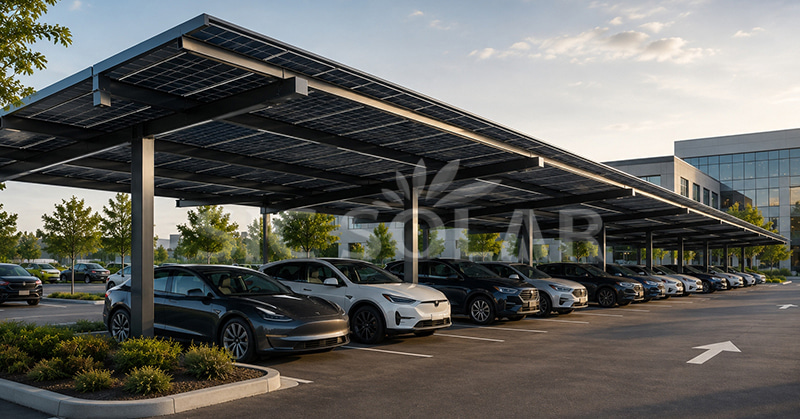
Een van de populairste opties voor commerciële projecten is de dubbele rij zonnecarport. Dit ontwerp gebruikt een centrale kolom om twee rijen parkeerplaatsen te ondersteunen, waardoor het aantal steunpalen wordt verminderd en het beschikbare oppervlak voor zonnepanelen wordt gemaximaliseerd. Minder kolommen maken het ook eenvoudiger voor voertuigen om te manoeuvreren en verbeteren het algemene uiterlijk van het parkeerterrein.
Voor kleinere parkeerterreinen zijn carports met één rij vaak de voorkeurskeuze. Deze constructies zijn ideaal voor parkeerplaatsen langs perceelgrenzen of smalle terreinen waar een indeling met dubbele rijen niet praktisch is. Ze bieden flexibiliteit en wekken toch een aanzienlijke hoeveelheid zonne-energie op.
Een andere belangrijke overweging is het constructieve ontwerp. Commerciële zonnecarports moeten tientallen jaren bestand zijn tegen wind, sneeuw en andere omgevingsbelastingen. Ingenieurs berekenen deze belastingen volgens lokale bouwvoorschriften en selecteren geschikte materialen zoals thermisch verzinkt staal of geanodiseerd aluminium om langdurige duurzaamheid en corrosiebestendigheid te garanderen.
Ook de paneeloriëntatie en de hellingshoek beïnvloeden de systeemprestaties. Bij veel projecten maximaliseren installaties die naar het zuiden gericht zijn de jaarlijkse energieopbrengst, terwijl oost-westconfiguraties het aantal geïnstalleerde panelen kunnen verhogen en gedurende de dag een gelijkmatiger elektriciteitsproductie kunnen bieden. De optimale indeling hangt af van de locatie van het terrein, de beschikbare ruimte en de energieverbruikspatronen.
Moderne commerciële zonnecarports bevatten vaak extra functies naast elektriciteitsopwekking. LED-verlichting, laadstations voor elektrische voertuigen, regenwaterafvoersystemen en kabelbeheer kunnen allemaal in de constructie worden geïntegreerd, waardoor zowel de functionaliteit als de gebruikerservaring verbeteren. Deze functies helpen parkeerterreinen slimmer, efficiënter en beter voorbereid op toekomstige transportbehoeften te maken.
De keuze van de fundering is ook een belangrijke factor. Afhankelijk van de bodemomstandigheden en de projectvereisten kunnen commerciële carports gebruikmaken van betonnen funderingen, heipalen of grondschroeven. De juiste fundering zorgt voor structurele stabiliteit en helpt tegelijkertijd de bouwtijd en installatiekosten te beheersen.
Het montagesysteem is even belangrijk. Een goed ontworpen draagconstructie vereenvoudigt de installatie, vermindert het onderhoud en zorgt voor langdurige betrouwbaarheid. Fabrikanten zoals SIC Solar, een bedrijf dat gespecialiseerd is in de productie en levering van fotovoltaïsche montagesystemen, bieden commerciële zonnecarportoplossingen die structurele sterkte combineren met installatie-efficiëntie. Hun systemen zijn ontworpen voor verschillende parkeerindelingen en kunnen worden aangepast aan specifieke projectvereisten.
Toekomstige uitbreiding moet ook tijdens de planningsfase worden overwogen. Modulaire carportontwerpen stellen bedrijven in staat om meer parkeerplaatsen of zonnepanelen toe te voegen wanneer de elektriciteitsvraag groeit, waardoor later grote structurele aanpassingen worden beperkt.
Het beste ontwerp voor een zonnecarport is een ontwerp dat energieproductie, parkeerefficiëntie, duurzaamheid en kosteneffectiviteit in balans brengt. Door een hoogwaardig montagesysteem te selecteren en de constructie af te stemmen op de omstandigheden van het terrein, kunnen commerciële parkeerterreinen betrouwbare bronnen van hernieuwbare energie worden en tegelijkertijd langdurige bescherming voor voertuigen en extra waarde voor vastgoedeigenaren bieden.



 IPv6 Netwerk ondersteund
 Nederlands
  English
 Deutsch
 español
 português
 العربية
 日本語
日本語 한국의
한국의 Melayu
 Tiếng việt