
Waar bent u naar op zoek?

De hoek waaronder je zonnepanelen plaatst, is cruciaal voor de energieopbrengst. Ze werken nog steeds, zelfs als de hoek niet perfect is, maar met de juiste hoek vang je het hele jaar door zoveel mogelijk zonlicht op. Een goede hoek betekent meer elektriciteit en betere prestaties op de lange termijn.
Waarom de hoek belangrijk is
De hellingshoek is simpelweg de hoek waaronder het paneel ten opzichte van de grond staat. Deze hoek bepaalt hoe direct de zon op het paneel valt. Direct zonlicht betekent meer vermogen. Als de hoek te steil of te vlak is, vangt het paneel op bepaalde momenten van het jaar minder zonlicht op.
De breedtegraad is een goed begin.
Een goede vuistregel is om de hellingshoek van het paneel aan te passen aan de breedtegraad van uw locatie. Dus als u zich op 30 graden breedtegraad bevindt, is een hellingshoek van 30 graden meestal een goede balans voor het hele jaar. Dit werkt doorgaans goed voor zowel woningen als bedrijven.
Aanpassingen per seizoen
Je kunt de hoek ook iets aanpassen voor betere prestaties in bepaalde seizoenen. Een steilere hoek is handig in de winter, wanneer de zon laag staat. Een vlakkere hoek kan juist helpen in de zomer, wanneer de zon hoog staat. De precieze aanpassing hangt af van het weer in jouw regio, je energiebehoefte en wat je met het systeem wilt bereiken.
Daken versus de grond
De manier waarop je de panelen installeert, bepaalt ook welke hoeken je kunt gebruiken. Op daken worden panelen meestal parallel aan het dak geplaatst. Als het dak al een goede hellingshoek heeft, is dat perfect! Is het dak vlak, dan moet je speciale bevestigingsbeugels toevoegen om de gewenste hoek te creëren.
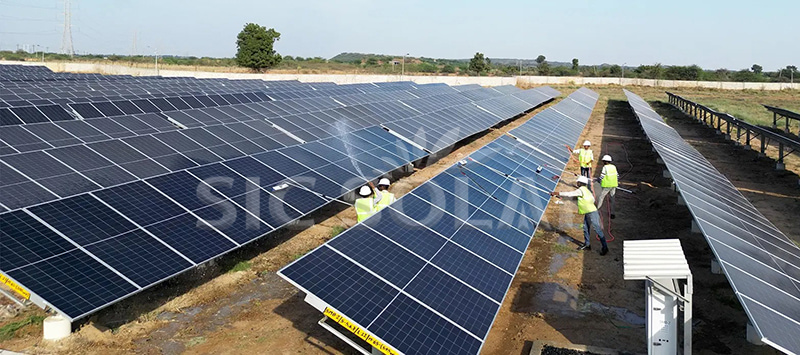
Op de grond gemonteerde systemen zijn eenvoudiger omdat je niet gebonden bent aan de vorm van het dak. Je kunt de panelen in de beste hoek plaatsen om zoveel mogelijk zonlicht op te vangen. Daarom zie je deze systemen vaak bij zonneparken en grote commerciële projecten.
Goede rijdieren zijn Sleutel
Om de juiste hoek te behouden, heb je een stevig montagesysteem nodig. Dit systeem moet de panelen op hun plaats houden, bestand tegen wind, sneeuw en andere weersomstandigheden. Goede montagesystemen maken de installatie bovendien eenvoudiger en zorgen ervoor dat de panelen jarenlang in de gewenste hoek blijven.
Bedrijven zoals SIC Solar Wij maken montagesystemen waarmee panelen in de optimale hoek geplaatst kunnen worden voor verschillende daken, grondopstellingen en zelfs carports.
Afstand en schaduw
De hoek heeft ook invloed op de afstand die de rijen panelen van elkaar moeten hebben. Bij een steilere hoek is meer ruimte nodig om te voorkomen dat de panelen elkaar in de schaduw zetten. Een goed systeemontwerp zorgt ervoor dat elk paneel voldoende zonlicht krijgt, vooral 's ochtends en 's middags.
De beste hoek voor uw zonnepanelen kiezen betekent rekening houden met uw locatie, het type installatie, de constructie en de weersomstandigheden. Als u de juiste hoek kiest en een goed montagesysteem gebruikt, zullen uw panelen efficiënter zijn en langdurig betrouwbare stroom leveren.



 IPv6 Netwerk ondersteund
 Nederlands
  English
 Deutsch
 español
 português
 العربية
 日本語
日本語 한국의
한국의 Melayu
 Tiếng việt